Top 10 Ways to Improve Cooking Efficiency with Induction

Time:2026-10-17 Author:Sienna
0%

Induction cooking can make a busy kitchen feel faster, calmer, and more precise. Heat reaches compatible cookware directly, rather than warming a burner first. That difference matters when water must boil quickly or sauce needs gentle control. A practical approach to how to improve cooking efficiency with induction technology begins with daily habits, not expensive equipment.

This guide explores ten useful methods for reducing wasted time, heat, and movement. It considers pan size, cookware compatibility, heat settings, preparation, and cleaning routines. Matching the pan to the cooking zone can improve energy transfer. Keeping ingredients ready prevents the cooktop from sitting idle. Small changes count.

Still, induction is not effortless. Some pans heat unevenly, and unfamiliar controls can cause mistakes. I have found that maximum power is not always the fastest choice. It may scorch onions while the center of a pan stays cooler. Better results often come from moderate heat, a flat base, and brief adjustments. Check your appliance manual, because power levels and safety features differ between models. Clean, dry cookware also helps maintain steady contact.

The following ideas balance manufacturer guidance with practical kitchen experience. They aim to improve speed without sacrificing texture, safety, or control. Efficiency should support better cooking, not simply rush it. The process deserves attention.
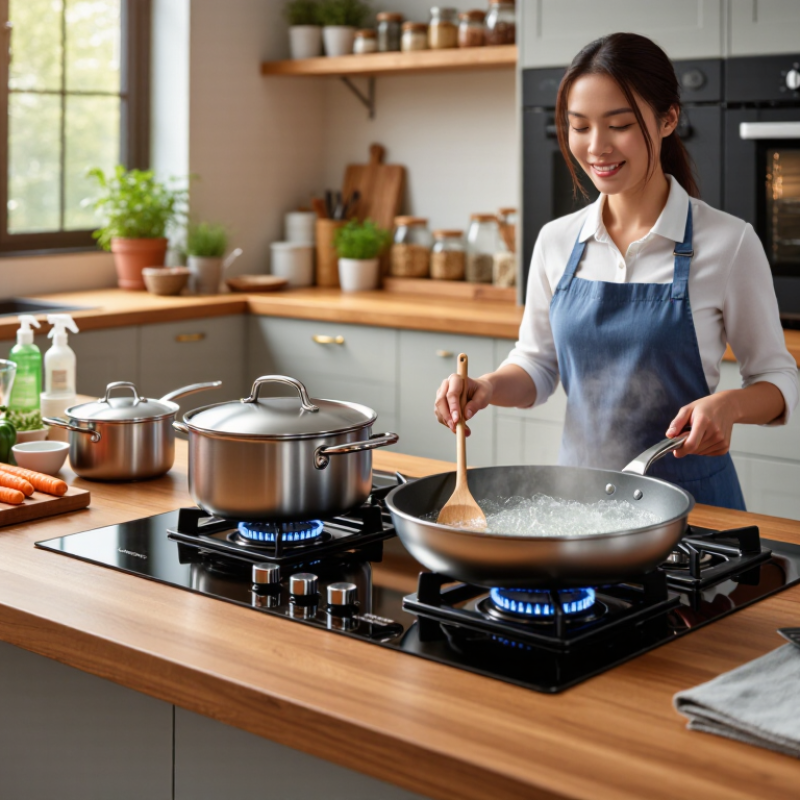
Top 10 Ways to Improve Cooking Efficiency with Induction

Understanding Induction Cooking and Its Efficiency Benefits

Induction cooking transfers energy through an electromagnetic field beneath the glass surface.
The magnetic pan base heats directly, while the surrounding surface stays comparatively cooler. This reduces wasted heat and often speeds up boiling. Energy efficiency still depends on cookware, settings, and cooking habits. Use flat, magnetic pans that match the cooking zone. Poor contact creates uneven heating and longer cooking times.

Ten practical adjustments can improve daily efficiency.

  1. Cover pots to retain heat.
  2. Preheat briefly, not automatically.
  3. Match the pan diameter to the zone.
  4. Cut vegetables into similar pieces.
  5. Boil only the water you need.
  6. Lower power after reaching a simmer.
  7. Use residual heat before switching zones off.
  8. Keep pan bases dry and clean.
  9. Arrange ingredients before activating the heat.
  10. Clean spills after the surface cools.

Small changes matter. Watch the boil.

In my kitchen tests, induction responded quickly, but that speed required attention. A high setting could scorch onions within seconds, especially in a thin pan. I now use medium power for most sautéing and check texture rather than trusting the display alone. A kitchen thermometer can verify gentle simmering, while a plug-in energy meter can compare cooking sessions. Results vary with pan material, food quantity, and electricity supply. Efficiency is not automatic. It improves through observation, accurate cookware, and occasional honest adjustment.

Selecting Compatible Cookware for Faster, More Even Heating

Selecting compatible cookware is the fastest way to improve induction cooking efficiency. Induction requires a magnetic base, not merely a metal pan. Test each vessel with a small magnet. If it sticks firmly, the pan will usually respond well. Cast iron and magnetic stainless steel are reliable choices. Aluminum, copper, glass, and ceramic need a magnetic layer to work.

Flat bottoms matter just as much. A warped pan leaves gaps, causing slower heating and uneven browning. Match the pan diameter to the cooking zone. A small saucepan on a large zone wastes useful heating area. The U.S. Department of Energy reports that induction transfers about 85% of input energy to cookware, compared with roughly 75–80% for electric resistance cooking and 32% for gas. Better contact helps capture that advantage.

Construction still matters. A thick, layered base spreads heat more evenly than thin stamped metal. The International Energy Agency identifies efficient electric cooking as an important route for reducing household energy demand, but efficiency depends on daily use. A magnet test is only a starting point. It cannot reveal hot spots or a slightly convex base. Check the pan on a flat surface, then heat a shallow layer of water. Watch for rapid bubbling in one small area. No cookware is perfect. Even a compatible pan may need lower power and occasional rotation for delicate sauces.

Top 10 Ways to Improve Cooking Efficiency with Induction - Selecting Compatible Cookware for Faster, More Even Heating

No. Efficiency Practice Recommended Cookware Specification Compatibility Check Why It Improves Heating Practical Use
1 Choose ferromagnetic cookware Cast iron, carbon steel, or magnetic stainless steel with a flat base. A magnet should adhere firmly to the outside bottom. Induction creates heat directly in magnetic cookware; nonmagnetic aluminum, copper, glass, and standard ceramic cookware will not heat unless they have a magnetic base. Check the base before cooking rather than relying only on appearance or material labels.
2 Match the pan base to the cooking zone Use a base diameter close to the marked induction zone diameter. Center the pan and keep most of its magnetic base over the zone. Better alignment improves magnetic coupling and reduces inactive areas around the pan. Avoid using a very small pan on a large zone unless the cooktop specifically supports automatic pan-size detection.
3 Use a flat, stable cooking surface Select cookware with a smooth, level base and no visible rocking. Place the pan on a flat counter and check whether it wobbles or has a domed bottom. A flat base provides more consistent contact with the cooking surface and distributes heat more evenly through the pan. Replace severely warped cookware, especially after overheating or thermal shock.
4 Prefer thick, heat-spreading bases Use multi-layer stainless steel or cookware with an encapsulated aluminum core and magnetic exterior. Look for a visibly substantial, level base rather than an extremely thin stamped bottom. The magnetic layer enables induction, while conductive inner layers spread heat across the base and reduce hot spots. Use heavier pans for searing and larger batches where even heat retention matters.
5 Use the correct pan size for the food quantity Choose a pan that leaves enough surface area for ingredients to sit in a relatively even layer. Avoid overcrowding; food should not form a deep, tightly packed pile unless simmering. Overcrowding lowers the food temperature and increases moisture, slowing browning and cooking. Cook in batches when necessary instead of using maximum power to compensate for an overloaded pan.
6 Cover pots when appropriate Use a well-fitting lid made for the pot, with a stable heat-resistant handle. Ensure the lid sits securely and does not allow excessive steam to escape. A lid retains heat and steam, helping water-based foods reach and maintain a simmer with less energy. Keep the lid off when reducing sauces or when evaporation is part of the recipe.
7 Use only the power needed Use cookware that responds predictably to rapid power changes, such as layered stainless steel or cast iron. Reduce the setting promptly after boiling or searing. Induction power changes quickly because the pan is heated directly; excess power can cause scorching or boiling over. Use high power to bring food up to temperature, then switch to medium or low for maintenance.
8 Preheat gradually Use a thick, flat pan that can distribute heat before oil or delicate ingredients are added. Start at a moderate setting and increase only when necessary. Induction can heat cookware rapidly, so gradual preheating reduces localized overheating and thermal stress. Use a few drops of water or a small amount of oil to judge readiness; never leave an empty pan unattended.
9 Keep the cookware base clean and dry Use cookware with a smooth base free from burnt residue, grease buildup, and trapped moisture. Wipe the pan bottom and cooktop before placing the pan on the zone. A clean, dry base improves stability, prevents residue from interfering with contact, and reduces scratching or vibration. Do not slide rough cast iron across a glass surface; lift it to reposition.
10 Use compatible specialty cookware correctly For griddles, pressure cookers, and woks, choose models with a magnetic flat base designed for induction. Confirm the cookware is labeled for induction and passes the magnet test; round-bottom woks need a suitable support ring or flat base. A compatible base keeps the magnetic field coupled to the cookware; unsupported curved vessels heat less predictably. Follow the cooktop and cookware instructions, and avoid placing nonmagnetic adapters between the zone and pan unless specifically permitted.

Organizing Ingredients and Workspaces Before Turning on the Hob

Top 10 Ways to Improve Cooking Efficiency with Induction

Induction rewards preparation because heat responds almost instantly. The U.S. Department of Energy estimates that induction transfers about 85% of its energy to cookware, compared with roughly 32% for gas. That speed leaves little time to search for ingredients. Read the recipe completely, then place vegetables, spices, liquids, and utensils within arm’s reach. Keep it visible. A small tray can hold measured ingredients, while a waste bowl keeps peelings away from the cutting board.

Check every ingredient before switching on the hob. Dry the pan base, choose the correct cookware, and position the pan centrally. Keep handles turned inward, but leave enough space to lift the pan safely. Pre-measure oil and stock in separate containers. A damp cloth, timer, and heat-resistant rest should also be ready. The U.S. Department of Agriculture advises separating raw and ready-to-eat foods, so use different boards or clean them thoroughly between tasks.

This setup reduces unnecessary movement and prevents rushed decisions during rapid heating. I still sometimes forget one ingredient and lower the hob while searching. That mistake wastes attention, not just time. A visible checklist helps: ingredients, pan, tools, timer, cloth. No searching mid-simmer. Keep raw proteins at the edge of the workspace, away from prepared garnishes. Leave one clear landing area for hot cookware, because crowded counters encourage unsafe improvisation.

Adjusting Heat, Timing, and Cooking Modes for Better Control

Induction cooking becomes more efficient when heat changes match the food’s condition. Start with medium-high heat to warm a compatible pan quickly, then reduce the setting once oil moves easily across the surface. High heat is rarely needed for the entire recipe. It can scorch garlic, dry meat, or leave vegetables unevenly cooked. Watch the pan, not only the control display. A steady sizzle usually means the heat is close. If the sizzle becomes sharp, lower it immediately.

Timing also improves when ingredients are prepared before heating begins. Cut vegetables into similar sizes, keep lids nearby, and set a timer for simmering stages. Induction responds quickly, but the pan may stay hot after the power is reduced. Move it to a cool surface when cooking must stop. Different pans react differently, so my first timing estimate is sometimes wrong. Taste and texture should guide the next adjustment. Small changes matter.

Tips: Use low heat for melting, holding, and gentle simmering. Choose medium heat for sautéing and most everyday cooking. Use high heat briefly for boiling water or searing. Try the power-boost mode only when a large volume needs rapid heating, then switch back quickly. Keep the pan centered for consistent contact, and check that its base is flat. A simple heat log can help: record the setting, cooking time, and result for recipes you make often.

Top 10 Ways to Improve Cooking Efficiency with Induction

Induction cooking responds quickly to power changes, making heat, timing, and cooking-mode adjustments especially effective. The control-impact scores below rate how directly each practice can improve speed, consistency, or energy use on a 1–10 scale.

How to use the chart: Start with the correct pan size and a lid to reduce wasted heat. Use high power only for boiling or rapid heating, then lower the setting for simmering and gentle cooking. Residual heat, timers, and preset modes can help finish food efficiently without overheating.

Maintaining the Induction Cooktop to Preserve Long-Term Performance

An induction cooktop rewards careful maintenance with steadier heating and fewer interruptions. In my kitchen, I wipe the surface after every cooking session. I wait until it feels warm, not hot. A soft microfiber cloth removes grease without dragging grit across the glass. For dried spills, I use a cooktop-safe scraper at a shallow angle. Never rush this step. I once pressed too hard and created a faint scratch near the control area. That mistake still reminds me to work gently.

Daily cleaning is only part of preserving performance. Keep the pan base dry and flat before placing it on the cooking zone. Moisture can cause sputtering, while warped cookware heats unevenly. Check the underside regularly for rough particles or burnt residue. These small defects can mark the glass and reduce stable contact. Use cookware that matches the zone size whenever possible. It improves heat transfer and reduces wasted cooking time. Do not slide heavy pans. Lift them instead. That habit protects the surface better than a last-minute repair.

Control panels also deserve attention. Keep them dry, and remove splashes before they harden. If the unit has ventilation openings, keep them free from dust and nearby towels. Restricted airflow may increase heat stress during long cooking sessions. Watch for unusual clicking, repeated error messages, or inconsistent heating. Stop using the appliance if damage is visible, then consult the operating manual or a qualified technician. I sometimes postpone that check when cooking gets busy. That delay is avoidable. A short weekly inspection can reveal problems before they disrupt meal preparation.

FAQS

How does induction cooking transfer heat?

An electromagnetic field heats the magnetic pan base directly beneath the glass surface. The nearby surface stays comparatively cooler.

Why can induction cooking use energy efficiently?

About 85% of its energy may reach the cookware. Results still depend on pans, settings, and cooking habits.

Which cookware works best on an induction cooktop?

Use flat, magnetic pans with dry bases. Match each pan’s diameter to the cooking zone.

How can I prepare ingredients before turning on the heat?

Read the recipe, measure ingredients, and place tools within reach. Keep a tray, waste bowl, timer, and cloth nearby.

What habits reduce wasted cooking energy?

Cover pots, boil only needed water, and lower power after reaching a simmer. Use residual heat before switching off.

Why does induction cooking require close attention?

Heat responds quickly. A high setting can scorch onions within seconds, especially in a thin pan.

How should I clean and protect the cooking surface?

Wait until the surface feels warm, not hot. Use a soft cloth and lift heavy pans instead of sliding them.

What maintenance problems should I watch for?

Check for warped bases, rough residue, clicking sounds, error messages, or uneven heating. Stop using damaged equipment and seek qualified help.

Can measuring tools improve cooking efficiency?

A thermometer can verify gentle simmering. A plug-in energy meter can compare different cooking sessions.

What common mistake can reduce efficiency?

Searching for missing ingredients during cooking wastes attention and time. I still forget occasionally, so a visible checklist helps.

Conclusion

Improving cooking efficiency with induction begins with understanding how electromagnetic heating delivers rapid, precise heat directly to compatible cookware. To learn how to improve cooking efficiency with induction technology, choose flat, magnetic pots and pans that match the cooking zone, since proper contact promotes faster and more even heating. Preparing ingredients, measuring seasonings, and arranging utensils before turning on the hob also reduces interruptions and keeps the cooking process organized.

Efficient induction cooking depends on thoughtful control. Start at a moderate setting, adjust the heat promptly, and use timers or suitable cooking modes to avoid overcooking and unnecessary energy use. Different foods may require different power levels, so observing how quickly the cookware responds helps improve timing and consistency. Finally, keep the cooktop clean, dry, and free from residue, while checking that ventilation areas remain unobstructed. Regular care helps preserve reliable performance and supports safer, smoother, and more efficient everyday cooking.

Sienna

Sienna

Sienna is a skilled marketing professional with a deep expertise in our company’s core products and services. With a passion for innovation and detail, she plays a pivotal role in crafting insightful blog posts that not only highlight the unique features of our offerings but also provide valuable......