Are induction cooktops environmentally friendly? In 2026, the answer depends on more than energy efficiency. It also depends on electricity sources, cooking habits, appliance lifespan, and manufacturing impacts.
The U.S. Department of Energy reports that induction cooking transfers roughly 80–90% of its energy to cookware. Gas cooking transfers only about 40–55%. That difference matters beside a saucepan, where less heat escapes into the kitchen. Induction also avoids combustion emissions inside the home. Brady Seals, a senior advocate at the Rocky Mountain Institute, states, “Gas stoves are a source of indoor air pollution.” Her warning supports a broader environmental argument, especially in tightly sealed homes.
However, the greenest choice is not automatically the newest cooktop. The International Energy Agency identifies electrification and cleaner power as major efficiency pathways, but electricity still varies by region. A coal-heavy grid weakens induction’s climate advantage. Manufacturing also requires mined materials, electronics, glass, and transportation. These impacts deserve attention.
Real-world use complicates the picture. A household that replaces a working electric cooktop may create unnecessary waste. A household replacing an aging gas range could reduce indoor pollution and energy losses. The answer is imperfect. That is important.
This 2026 guide compares leading induction cooktops through efficiency, repairability, controls, safety, durability, and total environmental impact. It examines certified data where available, while recognizing that laboratory performance cannot perfectly represent every kitchen. A smaller pan, a clean surface, and a renewable electricity plan may influence results more than premium branding.
What Induction Cooktops Are and How They Work
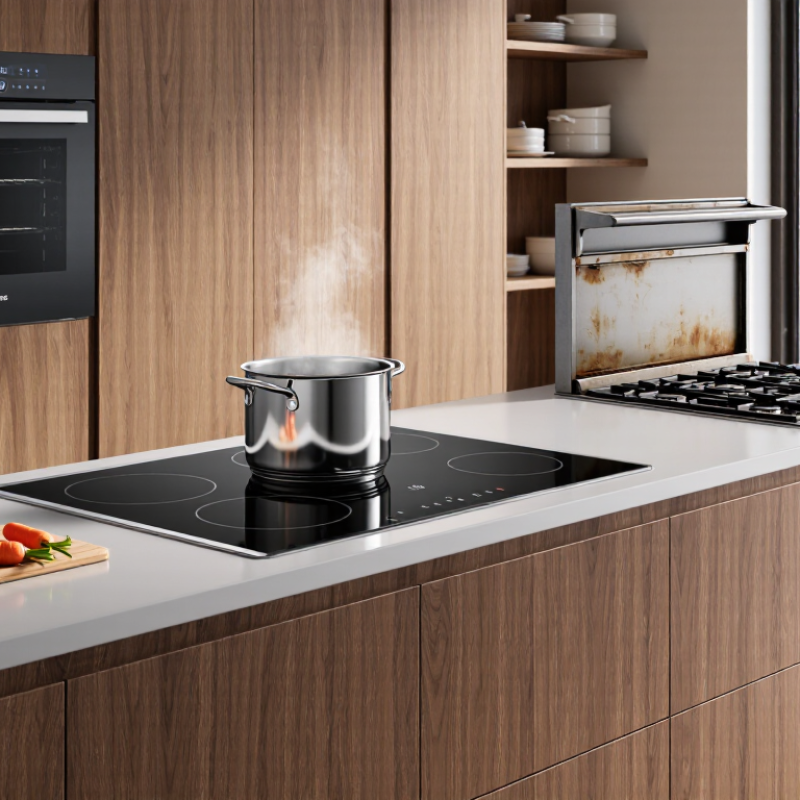
An induction cooktop heats a pan through magnetism, not through a glowing burner. Beneath its glass surface sits a tightly wound copper coil. When electricity passes through the coil, it creates a rapidly changing magnetic field. A compatible iron or steel pan responds with tiny electrical currents inside its base. Resistance turns those currents into heat, so the pan becomes the main heating element. The glass stays comparatively cooler, although hot pans can warm it. It sounds almost magical. The physics is practical.
Most models detect whether a pan is present and stop heating when it is removed. Power levels adjust the magnetic field quickly, giving close control for melting chocolate or boiling water. A flat, heavy pan usually transfers energy more evenly than a thin, warped one. To check compatibility, place a magnet against the pan base; firm attraction is a useful sign. However, magnetism alone does not guarantee good performance. The pan must also sit flat and match the cooking zone. Direct heating may waste less energy than warming surrounding air. Kitchens can feel less smoky and cooler during long cooking sessions. Still, induction uses electricity, and its climate impact depends on how that electricity is generated. Standby power, replacement parts, and cookware manufacturing deserve attention too. It is efficient, not automatically eco-friendly. That distinction matters.
Which Features Define the Best Induction Cooktops in 2026
2026 Best Induction Cooktops: Are They Eco-Friendly?
The best induction cooktops in 2026 should waste less energy during daily cooking. U.S. Department of Energy technical assessments report about 85% heat-transfer efficiency for induction, compared with roughly 75–80% for conventional electric cooking and 32% for gas. That difference matters. A strong model should also offer precise low-temperature control, rapid heating, automatic pan detection, and a clear residual-heat indicator. These features reduce overheating, idle energy use, and accidental burns.
Look for cookware sensing that stops power when a pan is removed. Useful. Power sharing also matters when several zones operate together. Without it, one large pot may quietly reduce another zone’s output. The International Energy Agency continues to identify electrification and energy efficiency as important routes for lowering household emissions, but the climate benefit depends on the electricity mix. Induction is not automatically clean everywhere. I still question smart connectivity when an app adds complexity without improving cooking control. Repair access, durable glass, replaceable electronic parts, and transparent energy information deserve equal attention. The most convincing product is not always the fastest one; it is the one that delivers stable heat, measured consumption, and fewer discarded components over many years.
What Makes Induction Cooking Energy Efficient or Wasteful
2026 Best Induction Cooktops: Are They Eco-Friendly?
Induction cooking can be highly efficient, but its performance depends on daily habits. The U.S. Department of Energy reports that induction transfers about 85% of its energy into cookware. Conventional electric cooking reaches roughly 75–80%, while gas delivers only about 32%. That difference matters when boiling water or simmering soup for an hour. Less heat escapes around the pan. The kitchen also feels cooler.
Efficiency can disappear through careless use. A warped or undersized pan heats unevenly. A pan left empty wastes electricity quickly. Frequent high-power cooking may also increase household demand during peak grid hours. The International Energy Agency notes that electricity’s environmental impact depends strongly on how power is generated. Clean electricity improves induction’s footprint. Coal-heavy electricity weakens the advantage.
Small choices matter.
A practical kitchen check is simple: match the pan base to the cooking zone, use a lid, and lower power after boiling. Residual heat still finishes many dishes. However, the device itself is not automatically sustainable. Manufacturing, packaging, repairs, and eventual disposal also carry environmental costs. The European Commission’s ecodesign research emphasizes energy use across products’ lifecycles, not only operation. I would question any efficiency claim measured under perfect laboratory conditions. Real kitchens are messier, and that difference deserves attention.
How to Choose an Eco-Friendly Induction Cooktop for Your Kitchen
Choosing an eco-friendly induction cooktop starts with energy transfer, not appearance.
The U.S. Department of Energy reports that induction transfers about 85% of its energy to cookware, compared with roughly 32% for gas and 75–80% for conventional electric cooking. Less wasted heat can mean a cooler kitchen and lower cooking energy use.
Check your electricity source, too.
The International Energy Agency’s Electricity 2024 report shows that power-sector emissions vary widely between regions. Induction is cleaner when your electricity comes from renewables or a lower-carbon grid. Ask for standby-power data, repair information, and recyclable materials. A durable glass surface may create less waste than a cheaper unit replaced several times.
Test the controls before buying.
Use a flat, magnetic pan and check whether the smallest setting stays steady during simmering. That detail matters for sauces and slow cooking. Avoid choosing by wattage alone. I initially treated higher power as better, but that was too simple. Efficient cooking also depends on pan size, lid use, and user habits. The U.S. Environmental Protection Agency warns that combustion appliances can add indoor pollutants, including nitrogen dioxide. Induction produces no combustion emissions at the cooking surface. Ventilate anyway. Cooking still creates moisture and particles.
Conclusion
The best induction cooktops in 2026 combine precise temperature control, fast heating, flexible cooking zones, safety features, and efficient power management. Unlike gas burners, induction cooktops create heat directly in compatible cookware through magnetic energy, while traditional electric models heat a surface before transferring warmth to the pan. This direct process can reduce heat loss, improve cooking speed, and keep the kitchen cooler. However, efficiency depends on cookware compatibility, pan size, cooking habits, standby power use, and the source of electricity.
So, are induction cooktops environmentally friendly? In many homes, the answer is yes, especially when the electricity supply includes renewable energy. They produce no direct combustion emissions indoors and generally use energy more efficiently than gas or conventional electric cooking. To choose an eco-friendly model, consider its energy consumption, durable construction, repairability, recyclable materials, automatic shutoff functions, and controls that prevent unnecessary heating. Selecting the right size and using flat, well-fitting cookware can further reduce waste and support more sustainable everyday cooking.
 Aris Cooktop
