Choosing a new cooktop can feel simple until heat speed, cookware, cleaning, and energy use enter the decision. This guide examines what is the difference between induction and ceramic cooktops, using practical testing data and expert guidance.
The U.S. Department of Energy reports that induction cooking transfers roughly 85% of its energy to cookware. Conventional electric cooking transfers about 75%. That gap can reduce wasted heat around the pan. Induction also responds quickly when temperatures change. A ceramic cooktop, usually a radiant electric model, heats a glass surface before heating the pan. It often costs less upfront. It also accepts more cookware types.
The surface tells only part of the story. Induction needs magnetic cookware, such as cast iron or many stainless-steel pans. A simple magnet test helps. Ceramic cooktops can use aluminum, copper, glass, and nonmagnetic stainless steel. However, their glowing surface stays hot longer. That matters in busy kitchens.
Consumer Reports appliance expert Paul Hope describes the central distinction clearly: “Induction heats the pan, while ceramic heats the surface.” This practical explanation supports the technical findings. ENERGY STAR efficiency guidance also recognizes induction’s lower heat loss during cooking. Still, energy savings vary with cooking habits, pan size, installation, and electricity prices. The comparison is not perfectly neat.
The following top 10 differences examine speed, control, safety, cleaning, noise, cookware, durability, installation, cost, and everyday experience. Some advantages look impressive on paper. Your kitchen may disagree.
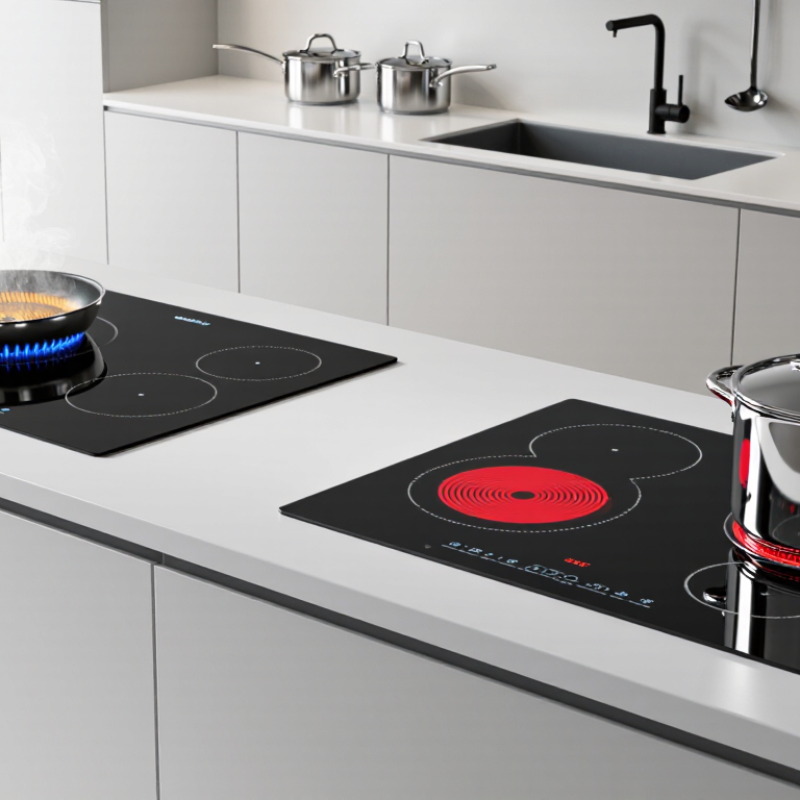
Induction and ceramic cooktops both have smooth glass surfaces, but they produce heat differently. An induction cooktop uses an electromagnetic field beneath the surface. That field heats a compatible magnetic pan directly. The glass usually stays cooler because it receives heat mainly from the pan.
A ceramic cooktop, often called a radiant glass cooktop, uses heating elements beneath its glass-ceramic surface. These elements glow red and transfer heat through the surface into the cookware. When I tested this style, the ring stayed hot longer than expected after switching it off. That lingering heat can be useful, but it requires careful handling. Induction responds faster when changing temperatures, while ceramic models often feel slower during boiling or simmering.
Cookware matters more with induction. A magnet should cling firmly to the pan’s base. Flat-bottomed pots also make better contact and heat more evenly. Ceramic cooktops accept more cookware types, but warped bases may create uneven heating. Both surfaces clean easily after cooling, although sugary spills can bond tightly to hot glass. I once underestimated that problem. A soft scraper and approved cleaner worked better than rough scouring pads. Induction cooking can be quieter than expected, though some pans produce a faint hum. Ceramic cooking is simpler to understand, but its visible glow does not always show the exact remaining heat.
Induction and ceramic cooktops may share a smooth glass-ceramic surface, but their heating systems work differently. Induction uses an electromagnetic field beneath the surface. This field creates electrical currents inside compatible iron-based cookware, heating the pan directly. The cooking surface stays comparatively cooler, except where the pan transfers heat back.
Ceramic cooktops usually use radiant electric elements below the glass. The element glows red, transfers heat through the surface, and then warms the pan. It is simple, but slower to react. A pan may remain hot after the control is turned down. In practical cooking, that delay can affect delicate sauces and melted chocolate.
The U.S. Department of Energy reports that induction can transfer about 85% of its energy to cookware. Traditional electric resistance cooking reaches roughly 75–80%, while gas averages about 32%. These figures describe typical system efficiency, not every household’s bill. Pan size, cookware quality, and cooking habits still matter.
Watch the pan.
A magnet test offers a quick check for induction compatibility. If it attaches firmly to the base, the pan will usually work. However, this shortcut is imperfect; some magnetic cookware heats unevenly because its base is thin or warped. Ceramic cooking also has a practical advantage: nearly any flat-bottomed pan can work. The European Commission’s Joint Research Centre has noted that appliance efficiency depends strongly on user behavior, including pan matching and avoiding unnecessary preheating. That detail is easy to overlook.
Induction and ceramic cooktops can look similar, but their cooking response feels very different. Induction heats the pan directly through electromagnetic energy. Ceramic cooktops heat an element beneath the glass, then transfer heat upward. The U.S. Department of Energy estimates induction transfers about 84% of energy to cookware, compared with roughly 74% for conventional smooth-top electric cooking. That gap can reduce wasted heat around the pan.
Controls reveal the practical difference. Induction usually offers rapid power changes, pan detection, timers, and precise low-temperature settings. When you lower the setting, the pan responds quickly. Ceramic controls are often simpler, with numbered dials or touch buttons. However, the glass remains hot after switching off, and residual heat can continue cooking delicate sauces. The International Electrotechnical Commission’s IEC 60350-2 standard supports comparable appliance testing, but household results still depend on pan size, cookware quality, and electrical supply. I once assumed faster heating meant better cooking. That is incomplete. Slow, gentle heat can be useful for melting chocolate or holding soup.
Tips: Test a cooktop with a small saucepan before buying. Check whether the controls are readable from standing height. For induction, use magnetic cookware with a flat base. For ceramic surfaces, choose pans that match the heating zone and avoid dragging them across the glass. Touch controls can also become frustrating with wet fingers. That detail is easy to miss.
Induction and ceramic cooktops may look similar, but their safety behavior differs. Induction heats compatible cookware through a magnetic field, while the glass surface receives less direct heat. This can reduce accidental burns, but the surface still becomes warm from the pan. Residual heat remains after cooking. Never touch it immediately.
Ceramic cooktops use radiant heating beneath the glass. The heating zone glows red, and nearby areas can stay hot for several minutes. A spilled sauce may burn onto the surface quickly. Induction usually gives better temperature control, yet unsuitable cookware simply will not heat. Check the pan base with a magnet before cooking.
Cleaning both surfaces requires patience. Wipe induction glass with a soft cloth after it cools, especially around the cookware contact area. Ceramic glass often needs a dedicated scraper for hardened food, held nearly flat to avoid scratches. Avoid abrasive powders, steel wool, and dragging heavy pans across either surface. Lift them instead.
Maintenance is not complicated, but small habits matter. Keep pan bases dry, because trapped moisture can leave marks or cause uneven contact. Inspect the glass regularly. A crack is not a cosmetic problem; stop using the cooktop and seek qualified service. I used to treat “easy to clean” as “maintenance-free.” That assumption was wrong. Even a smooth surface needs careful handling, and one rushed wipe can create damage that cleaning cannot remove.
Choosing between induction and ceramic depends on your kitchen, cookware, and cooking habits. Induction heats magnetic pans directly, so water boils quickly and temperature changes feel immediate. It also keeps the surrounding glass cooler, which helps in homes with young children. However, every pan must work with the magnetic surface. Replacing several pans can increase the real installation cost.
Ceramic cooktops suit kitchens using mixed cookware, including aluminum or glass pans. Their smooth surface looks clean and handles everyday frying, simmering, and baking preparation well. Heat spreads more slowly, and the surface stays hot after switching off. That requires careful timing, especially when melting chocolate or reducing a delicate sauce. In my experience, cooks often underestimate this stored heat during their first week.
Tips: Test your pans with a magnet before choosing induction. Leave space around either cooktop for safe ventilation and comfortable movement. Wipe spills after the surface cools, since sugary residue can harden quickly. Check your electrical supply with a qualified installer, especially during a kitchen renovation. A powerful cooktop is not always the best choice for a small household. Surface layout, pan size, and your usual recipes matter more than headline wattage.
| No. | Comparison Dimension | Induction Cooktop | Ceramic Cooktop | Best Choice |
|---|---|---|---|---|
| 1 | Heating Technology | Uses electromagnetic fields to heat compatible cookware directly. The cooking vessel becomes the primary heat source. | Uses electric resistance elements beneath a smooth glass-ceramic surface. The element heats the surface, which then heats the pan. | Depends on cookware and budget |
| 2 | Boiling and Heating Speed | Generally heats water and pans faster because energy is transferred directly into the cookware with less heat loss. | Usually heats more slowly because the radiant element must heat the glass surface before heat reaches the pan. | Induction |
| 3 | Temperature Control | Provides rapid, precise adjustments. Many models can reduce or stop heat quickly when the power level changes. | Offers reliable control, but the element and glass retain heat after the setting is reduced or switched off. | Induction |
| 4 | Energy Efficiency | Typically transfers about 80–90% of electrical energy to the cookware, according to commonly cited laboratory estimates. | Typically transfers about 70–75% of electrical energy to the cookware because more heat is lost through the surface and surrounding air. | Induction |
| 5 | Cookware Requirements | Requires cookware with a magnetic base, such as cast iron or many types of stainless steel. A magnet test can help check compatibility. | Works with most flat-bottom cookware, including aluminum, copper, stainless steel, cast iron, and glass, provided the pan is suitable for a smooth electric surface. | Ceramic for flexibility |
| 6 | Surface Temperature and Safety | The surface is heated mainly by contact with the hot pan, so it usually cools faster. Most units detect cookware and shut off when no suitable pan is present. | The glass surface becomes very hot during cooking and remains hot after shutdown. Residual-heat indicators are important safety features. | Induction |
| 7 | Cleaning and Spill Management | The relatively cooler surface reduces the chance of spills burning onto the cooktop. A flat glass surface is easy to wipe after cooling. | Also easy to wipe, but sugary spills, grease, and food residue can bake onto the hot surface and may require a suitable scraper or cleaner. | Induction |
| 8 | Noise and Cooking Experience | Some units may produce a low hum, buzz, or clicking sound, especially at high power or with certain pans. There is no open flame. | Usually operates quietly because it relies on radiant heating, although cooling fans may be present in some models. | Ceramic for quiet operation |
| 9 | Installation and Electrical Needs | Often requires a dedicated circuit with sufficient electrical capacity. The exact requirement depends on the cooktop’s rated wattage and local electrical codes. | Also commonly requires a dedicated circuit, but installation requirements vary by rated power, household wiring, and local regulations. | Check the local requirements |
| 10 | Best Kitchen and Cooking Needs | Best for fast weeknight cooking, precise simmering, energy-conscious households, families prioritizing safety, and modern kitchens with compatible cookware. | Best for budget-focused renovations, households that want to keep existing cookware, occasional cooking, and users who prefer a simple radiant electric surface. | Choose by priorities |
It uses an electromagnetic field beneath the glass. The field heats compatible magnetic cookware directly. The surface usually stays cooler.
Heating elements beneath the glass glow red. They transfer heat through the surface into the pan. The glass remains hot afterward.
Induction usually boils water faster and changes temperature more quickly. Ceramic heating reacts more slowly. Watch the pan carefully.
Use cookware with a magnetic base. A magnet should cling firmly underneath. Flat, undamaged bases heat more evenly.
Usually, yes. Flat-bottomed aluminum, glass, and other pans can work. Warped bases may heat unevenly.
Both have smooth glass surfaces. Let the surface cool first. Sugary spills can harden tightly. A soft scraper works better than rough pads.
Typical induction systems transfer about 85% of energy to cookware. Traditional electric resistance systems reach roughly 75–80%. Real results depend on pan size and habits.
Induction often leaves surrounding glass cooler, which may reduce contact burns. However, the pan can still be very hot. Supervision remains necessary.
Test your pans with a magnet. Check the electrical supply with a qualified installer. Leave ventilation space. A higher power rating is not always better.
They underestimate stored heat on ceramic surfaces. A sauce may continue thickening after the control is lowered. I did this once. Timing needs practice.
Induction and ceramic cooktops are both sleek, flat cooking surfaces, but they use different heating methods. The key question, “what is the difference between induction and ceramic cooktops,” comes down to how heat reaches the pan. Induction cooktops use magnetic energy to heat compatible cookware directly, offering fast temperature changes and efficient cooking. Ceramic cooktops use heating elements beneath a smooth glass-ceramic surface, which then transfers heat to the cookware. As a result, induction models are generally more responsive, while ceramic surfaces may take longer to heat and cool.
Both options are easy to clean because they have flat surfaces, although spills should be removed promptly after the cooktop cools. Induction cooking is typically safer because the surface produces less residual heat and often detects whether suitable cookware is present. Ceramic cooktops can work with a wider range of pots and pans but require more care around hot surfaces and scratches. The best choice depends on cooking habits, cookware compatibility, budget, energy efficiency goals, and whether speed, simple controls, or broad usability matters most.
