What safety features do modern induction cooktops have, and how much protection do they really offer? The answer depends on the model, its installation, and how it is used. Many cooktops detect whether compatible cookware is present, then stop heating when a pan is removed. Automatic shutoff can limit unattended heating, while child locks help prevent accidental changes to the controls. Some models also signal residual heat, even though the glass surface does not glow like a traditional electric element.
UL Solutions consumer-safety expert John Drengenberg has advised consumers to choose tested appliances and follow manufacturer instructions. A responsible paraphrase of that guidance is simple: “Know the safeguards, and use the appliance as directed.” That matters because induction reduces certain burn risks, but it does not make cooking risk-free. A hot pan can still burn skin, and spills can make the floor slippery. Small details matter.
This guide looks at the protections built into modern induction cooktops, including pan detection, temperature limits, lock controls, and automatic shutoff. Features vary, so check the manual rather than assuming every model works the same way. Consider the ordinary moment: you lift a saucepan, answer the door, and leave the cooking zone empty. The cooktop may stop heating—but that is not a substitute for attention. Safety technology helps; it cannot make every habit safe.
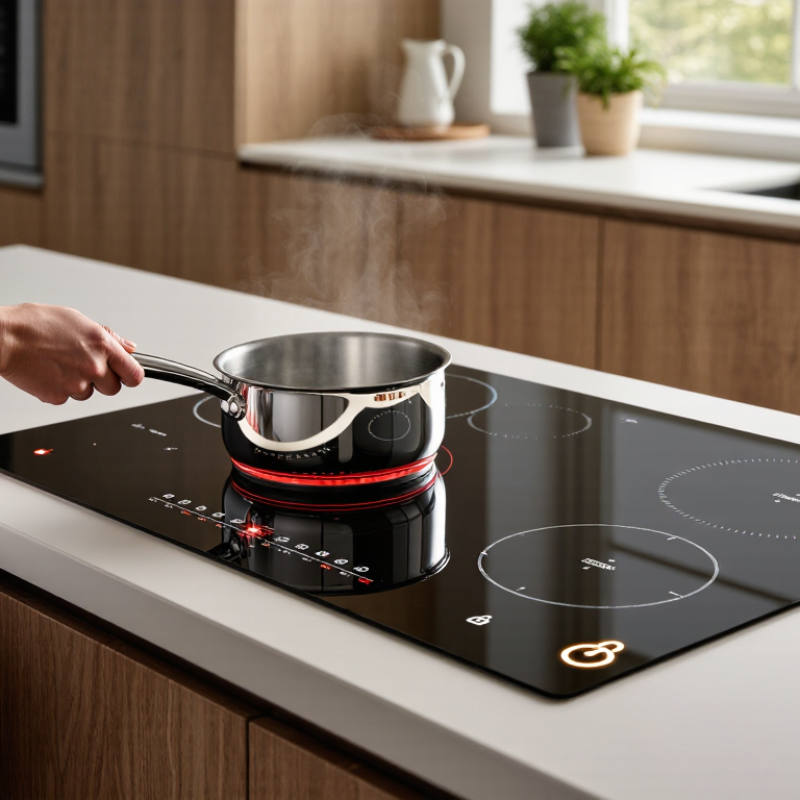
Modern induction cooktops use sensors and electronic controls to reduce common cooking risks. They create heat in compatible cookware rather than using an exposed flame. The glass surface may still become hot from contact with a heated pot. “Cooler” does not mean cool.
Pan detection can stop power when cookware is removed or unsuitable. Many models also monitor temperature and shut down if overheating occurs. A residual-heat indicator warns that a cooking zone remains warm. Some units offer child locks, spill-response controls, or automatic shutoff after prolonged use. Features vary, and sensors cannot prevent every accident. A wet control panel or an incorrectly placed pan may affect operation, so check the manual for your model.
Tips: Keep the cooking zone and controls dry. Center the pan, and use cookware marked as induction-compatible. Watch for the residual-heat symbol before touching the glass. I still find the automatic shutoff easy to overtrust; set a timer when simmering, and don’t leave cooking unattended.
Pan detection helps an induction cooktop respond to the cookware on its surface. The appliance creates heat through a magnetic field, so it needs a suitable pan in the right position. If no pan is detected, many models will not start heating. If a pan is lifted away, the cooktop may stop delivering power after a brief delay. That matters.
Detection can also depend on the pan’s base size and placement. A small saucepan set off-center may not register, even when it is induction-compatible. You might see a flashing indicator or hear a short beep. These signals are useful, but they can vary by model. Check the cooktop’s manual if a pan repeatedly fails to register.
Protection against empty cookware is a separate safeguard. Some cooktops use temperature sensing, power controls, or timed shutoff to respond when an empty pan heats too quickly. For example, a dry skillet left over a hot cooking zone may trigger reduced power or an alert. Not every cooktop offers the same protection, and sensors may react only after the pan becomes hot. An empty pan can still overheat before that happens. I would not treat this feature as a substitute for staying nearby, especially when preheating. The distinction is easy to overlook.
| Safety Feature | How It Works | Typical Protection | What to Keep in Mind |
|---|---|---|---|
| Pan detection | The cooktop checks whether suitable cookware is positioned over the induction zone before transferring heat. | With no suitable pan detected, the zone usually will not heat or will stop heating. | Detection depends on cookware material, size, and placement. Magnetic cookware is generally required; check the cooktop and cookware instructions. |
| Empty-cookware and overheating protection | Depending on the model, sensors monitor cookware or cooking-zone temperature and may reduce power or switch the zone off if temperatures become excessive. | Can help limit overheating when a pan is left empty or its contents boil away. | Detection methods and response thresholds vary. This feature cannot guarantee that every empty-pan situation will be detected; do not leave heating cookware unattended. |
| Automatic shutoff | A zone may turn off after a set operating period, after cookware is removed, or when the control detects an abnormal condition. | Helps reduce the risk of prolonged unattended operation. | Timing and triggering conditions differ by model and power setting. It is not a substitute for switching the cooktop off after use. |
| Residual-heat indicator | An indicator warns that a cooking zone or nearby glass surface remains hot after cooking. | Helps prevent accidental contact burns while the surface cools. | The glass can remain hot from the pan even though induction heats the cookware directly. Wait for the indicator to clear before touching the area. |
| Child or control lock | A lock setting disables or restricts touch controls, either temporarily or until deliberately released. | Helps prevent unintended setting changes or activation through accidental contact. | Lock behavior varies. Learn how to activate and release it using the model’s instructions. |
| Spill or control-panel protection | Some cooktops can pause, beep, or switch off when liquid or an object interferes with the touch controls. | May help prevent unintended commands or continued operation when controls are obstructed. | This response is not available on every model, and spills should be cleaned promptly once the surface is safe to touch. |
| Power and temperature controls | Electronic controls regulate power delivered to the induction coil and provide selectable heat settings. | Allows cooking power to be adjusted without an open flame and can help limit excessive heating when used appropriately. | Cookware can heat quickly. Use a suitable setting, follow cookware guidance, and avoid heating an empty pan unless its instructions specifically allow it. |
Note: Safety functions and their behavior vary by model. Consult the cooktop’s user manual for feature details and operating instructions.
Temperature controls help keep cooking steady, but they do not work identically across cooktops. Some models offer preset temperature modes; others adjust heat through power levels. Sensors may monitor the cooking surface or cookware and reduce power when temperatures rise too high. Their readings are useful, not perfect: pan material, size, and placement can affect performance. Overheat protection may also shut off a cooking zone, while a residual-heat indicator warns that the glass remains hot after the pan is removed.
These safeguards matter, but they cannot prevent every cooking fire. The National Fire Protection Association’s Home Cooking Fires report found that cooking equipment was involved in an average of 158,400 reported U.S. home structure fires annually from 2017 to 2021. The fires caused an average of 470 civilian deaths and 4,150 injuries each year. Those figures cover cooking equipment generally, not induction cooktops alone. Keep in mind that automatic shutoff features differ by model and may not replace attentive cooking.
Tips: Use flat-bottomed cookware that matches the cooking zone, and keep its base centered. Check the manual for temperature limits and shutoff behavior. A pan can stay hot even after the controls switch off.
Modern induction cooktops often pair child locks, spill detection, and residual heat warnings with precise temperature controls. A child lock can disable touch buttons, reducing the chance that a curious child changes a setting or starts a cooking zone. Check the manual: some locks work only when the cooktop is off. They may not prevent someone from touching a hot pan. Keep handles turned inward.
Spill detection can pause a zone or sound an alert when liquid reaches the controls, but its response varies by model. If water bubbles over a pot, wipe the surface once it is safe and check whether cooking stopped. Do not assume every spill triggers a shutoff.
Residual heat indicators show that a cooking area may still be hot after the pan is removed. The glass can retain heat from cookware, even though induction heats the pan directly. Wait for the indicator to go out before cleaning, and avoid testing the surface with your hand. It is a useful warning, not a perfect temperature reading. These safeguards help, but attentive supervision still matters.
Modern induction cooktops combine electrical protection with cookware checks. Pan detection usually stops heating when a suitable vessel is removed, while residual-heat indicators warn that the glass may remain hot. Many models also provide control locks, timer-based shutoff, and overtemperature protection. These features reduce specific risks; they do not make the surface or wiring risk-free.
Installation matters. Follow the appliance’s specified circuit and grounding requirements, and ask a qualified electrician to assess existing wiring when needed. A cracked glass surface, damaged cord, or repeatedly tripping breaker calls for stopping use, not resetting and hoping. Still, limits remain. Induction requires compatible, flat-bottomed cookware, and very small or poorly centered pans may not be detected reliably. “Off” also does not mean “cool”; a hot pan can warm the glass after cooking. NFPA’s Home Cooking Fires report found that cooking equipment was involved in 49% of reported U.S. home fires during 2014–2018. That figure covers all cooking equipment, not induction alone—a distinction that is easy to miss. Treat safety indicators as prompts, not guarantees, and check the manual for model-specific limits.
Not always. A hot pan can warm the glass, so check the residual-heat symbol before touching it.
Pan detection usually stops heating when suitable cookware is removed. It may not detect every small or poorly centered pan.
Use flat-bottomed cookware marked as induction-compatible. Center it on the cooking zone for more reliable detection.
Features may include child locks, timers, spill-response controls, and overtemperature protection. Not every model has them.
Stop using the cooktop. Have damaged wiring or the appliance checked instead of repeatedly resetting the breaker.
No. A hot pan can leave the glass warm after cooking, so wait for the residual-heat warning to clear.
No. Keep controls dry, watch the cooking, and set a timer when simmering. I still find automatic shutoff easy to trust too much.
Follow the specified circuit and grounding requirements. Ask a qualified electrician to assess existing wiring when needed.
What safety features do modern induction cooktops have? Many use pan-detection systems that activate heating only when compatible cookware is placed in the cooking zone. If a pan is removed, is too small, or is left empty and becomes excessively hot, the cooktop may reduce or stop power. Temperature controls and overheat protection can also help limit excessive heat, while clear indicators make it easier to monitor settings during cooking.
Additional safeguards may include child locks to prevent accidental changes, spill detection that pauses or switches off a cooking zone, and residual-heat warnings that show when the surface or cookware area may still be hot. Electrical protections can respond to certain faults or unstable conditions, but they do not eliminate every risk. Users should follow the appliance’s instructions, use suitable cookware, keep controls and vents clear, and avoid touching a zone until its heat warning has cleared.