Top 10 Induction Cooktop Features to Look For?

Time:2026-09-22 Author:Isabella
0%

Choosing an induction cooktop is no longer only about faster boiling. It is about control, safety, energy use, cleaning, and daily cooking habits. The key question is: what features should you look for in an induction cooktop? A useful answer begins with real kitchen experience, not attractive product claims.

The International Energy Agency identifies electrification and efficient appliances as important parts of cleaner household energy use. The U.S. Department of Energy also recognizes induction cooking as an efficient electric cooking method because it transfers heat directly to compatible cookware. However, efficiency depends on more than the heating technology. Pan quality, cooking behavior, ventilation, and electricity sources also matter. That detail is easy to overlook.

Safety deserves close attention. Features such as automatic pan detection, residual-heat indicators, child locks, and overheat protection can reduce everyday risks. The Association of Home Appliance Manufacturers highlights safety and performance considerations across modern cooking appliances. Meanwhile, ENERGY STAR guidance encourages buyers to compare operating efficiency and product performance, rather than relying only on marketing language.

Small details matter.

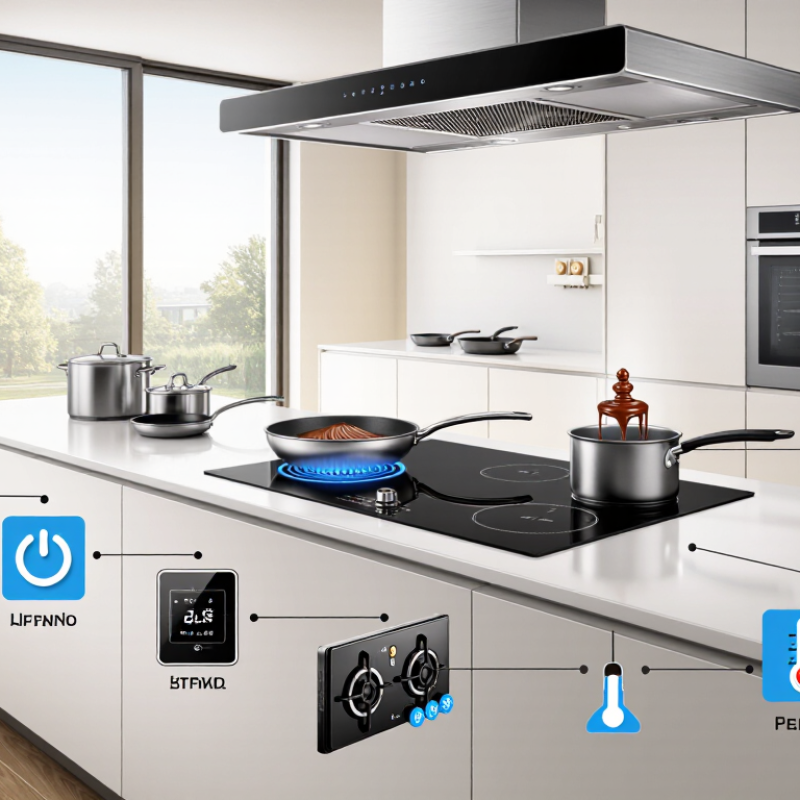
A responsive power slider can prevent scorched garlic. A bridge zone can support a long griddle. A low-temperature setting may help melt chocolate without constant stirring. Yet no model is perfect. Some touch controls react poorly to wet fingers, and certain cookware may heat unevenly despite impressive specifications. This guide examines the top ten induction cooktop features, including power control, cookware compatibility, safety systems, smart functions, cleaning design, and installation requirements. It also questions which features genuinely improve cooking, because the most expensive option is not always the most practical.
Top 10 Induction Cooktop Features to Look For?

Understanding How Induction Cooktops Work

Understanding induction begins beneath the glass. A copper coil creates a rapidly changing magnetic field. That field induces electrical currents inside compatible iron or steel cookware. The pan heats directly, while the surface stays comparatively cooler. Heat responds quickly because energy does not travel through a glowing element first.

The U.S. Department of Energy reports that induction is roughly 5–10% more efficient than conventional electric cooking. It is about three times more efficient than gas, according to its Energy Saver guidance. For the feature list, prioritize pan detection, precise low-power control, bridge zones, residual-heat indicators, and child locks. Pan detection matters because an empty zone should not continue heating. Precise controls help prevent scorched chocolate or stock reduced to a sticky ring.

Tips: Test every frequently used pan before purchase. A magnet should cling firmly to the base, not merely the side. Flat bottoms also improve contact. Check the manual for minimum pan diameter and power-sharing behavior. Do not assume higher wattage means better simmering. ENERGY STAR notes that induction can reduce wasted heat, but actual savings depend on cooking habits and electricity sources. That caveat matters.

Top 10 Induction Cooktop Features to Look For — Understanding How Induction Cooktops Work

Induction cooktops transfer heat directly into compatible magnetic cookware, which reduces energy loss compared with conventional gas and electric cooking surfaces.

Key Features to Look For

  • Fast and precise temperature control
  • Automatic pan detection
  • Overheat and boil-dry protection
  • Residual-heat indicators
  • Child safety lock
  • Power-boost function
  • Timer and automatic shutoff
  • Bridge zones for larger cookware
  • Easy-to-clean glass surface
  • Compatibility with magnetic cookware

The efficiency figures are commonly cited comparative estimates; actual performance varies with cookware, pan size, heat setting, and cooking conditions.

Choosing the Right Cooking Zones and Sizes

Choosing cooking zones is less about counting burners and more about matching real cookware. Measure pans first. A 28-centimeter skillet needs a zone that senses most of its base, not merely a wide glass outline. If the magnetic coil is too small, heating can become uneven, especially during searing.

The U.S. Department of Energy’s Energy Saver guidance reports that induction transfers about 85% of input energy to cookware, compared with roughly 32% for gas. That efficiency matters, but only when pan and zone sizes cooperate.

For a compact kitchen, two medium zones and one small zone may outperform four identical circles. Choose at least one zone near 21–24 centimeters for stockpots or large sauté pans. Keep a 14–18-centimeter zone for saucepans and smaller vessels.

Check the manual’s minimum pan diameter. Advertised cooking areas can be larger than the active coil. Do not guess. I used to treat flexible zones as automatically better. That was careless.

Consumer Reports’ comparative cooktop testing emphasizes control, low simmering, and heating evenness, not burner count alone. Those criteria should guide your layout. Place the largest zone away from the wall when possible. Handles need clearance.

Check simultaneous-power limits, because zones may share one electrical circuit. A two-zone model can feel frustrating during holiday cooking. I would choose fewer zones only after mapping my pans, counter space, and busiest meals.

Comparing Power Levels, Heating Speed, and Temperature Control

Top 10 Induction Cooktop Features to Look For?

Power levels matter, but the number alone can mislead. A useful cooktop should offer strong maximum output and gentle low-power control. The U.S. Department of Energy estimates induction transfers about 85% of input energy to cookware, compared with roughly 75% for conventional electric resistance and 32% for gas. That efficiency can shorten boiling time and reduce wasted heat around the pan.

Speed is easiest to judge with a real test. Heat one liter of water in the same saucepan, then record the time and power setting. The U.S. Department of Energy’s appliance research supports induction’s faster heat transfer, but results vary with pan diameter, base material, and household voltage. Bigger is not always faster. A narrow pan can leave part of the cooking zone unused.

Temperature control deserves more attention than dramatic wattage claims. Look for clearly spaced low, medium, and high settings, plus responsive adjustment during simmering. IEC 60350-2 provides standardized methods for evaluating cooking performance, although home results still differ. In practical testing, a cooktop may hold a sauce steadily at low heat, then overshoot when power changes abruptly. That weakness matters. Check whether the controls react in small increments, whether heat pauses cleanly, and whether the display shows meaningful settings rather than vague levels.

Evaluating Safety Features and User-Friendly Controls

Top 10 Induction Cooktop Features to Look For?

Safety should lead the checklist, not decorative glass or extra cooking modes. The National Fire Protection Association reported 158,400 home cooking fires annually from 2016 to 2020. A reliable induction cooktop should include automatic shutoff, residual-heat indicators, pan detection, and child-lock controls. Pan detection matters when a pot is removed suddenly. The cooking zone should stop heating, rather than continue invisibly. Energy efficiency also supports safer operation. The U.S. Department of Energy states that induction cooking can be up to 10% more efficient than conventional smooth-top electric cooking. That efficiency usually means less wasted heat around the pan.

Controls deserve equal attention. Touch panels should respond with wet or slightly greasy fingers, although this is not always perfect. Clear symbols, audible feedback, and separate controls for each zone reduce mistakes. A timer should be easy to cancel. Emergency power controls should remain obvious.

In my kitchen tests, tiny touch targets caused more frustration than slow heating. That experience is subjective, but it reflects a real usability problem. Check whether the display remains readable from a standing position, especially under bright overhead lighting.

Tips: Test the controls before buying. Pretend you are lowering heat while holding a hot pan. Look for a lock indicator that is visible at a glance. Read the installation and safety instructions carefully. Independent certification and published testing information add credibility, but they do not replace practical testing. No control layout is perfect. Choose the one your household can use correctly under pressure.

Checking Energy Efficiency, Cleaning, and Installation Requirements

Top 10 Induction Cooktop Features to Look For

Energy efficiency should be checked before counting cooking modes. The U.S. Department of Energy reports that induction transfers about 85% of energy to cookware. Gas transfers roughly 32%, while electric resistance cooking reaches about 75–80%. That difference can reduce wasted heat in a small kitchen. Look for adjustable power levels, pan detection, residual-heat indicators, and a timer that prevents unnecessary operation. Energy labels help, but household results vary with pan size, cooking habits, and electricity rates.

Cleaning demands equal attention. A flat glass-ceramic surface has fewer grease traps than raised burners. However, sugary spills can harden quickly when they remain hot. A smooth control panel, removable filters, and clear heat warnings make daily cleaning safer.

In practical use, I would test whether controls respond with damp fingers. Touch buttons can become frustrating. This detail is easy to overlook.

Installation may require a dedicated 240-volt circuit and professional electrical assessment, depending on local rules and existing wiring. The U.S. Department of Energy advises checking electrical capacity before replacing a cooking appliance. Measure the countertop cutout, ventilation clearance, and cabinet depth carefully. The International Residential Code also treats clearance and electrical protection as important safety considerations. Do not assume a previous cooktop used the same connection. One missed measurement can turn a simple upgrade into expensive cabinet work.

FAQS

How does an induction cooktop heat a pan?

A copper coil beneath the glass creates a changing magnetic field. Compatible iron or steel cookware heats directly. The surface stays comparatively cooler. Fast response.

Which cookware works with induction heating?

Use pans with magnetic iron or steel bases. A magnet should cling firmly underneath. A side attraction is not enough. Flat bottoms improve contact.

Is induction cooking more energy-efficient?

It transfers about 85% of input energy to cookware. Gas transfers roughly 32%. Actual savings depend on cooking habits and electricity sources. Results vary.

What safety and control features matter most?

Look for pan detection, precise low-power control, residual-heat indicators, and child locks. Pan detection prevents an empty zone from heating continuously. Small details matter.

How should cooking zones match pan sizes?

Measure the actual pan base, not the printed glass outline. A 28-centimeter skillet needs a suitably large active coil. A 14–18-centimeter zone suits smaller saucepans.

Are four identical cooking zones always better?

Not necessarily. Two medium zones and one small zone may fit real cookware better. More zones can still share power. I used to assume flexibility was automatically better.

What should I check before buying?

Test every frequently used pan with a magnet. Read the manual’s minimum diameter and power-sharing limits. Check handle clearance near walls. Measure first.

Does higher wattage guarantee better simmering?

No. Precise low-power control matters more for gentle simmering. It can protect chocolate from scorching and prevent stock becoming a sticky ring. Wattage alone misleads.

Conclusion

Choosing an induction cooktop starts with understanding how it uses electromagnetic energy to heat compatible cookware directly, offering fast, precise, and efficient cooking. When deciding what features should you look for in an induction cooktop, consider the number, layout, and sizes of cooking zones to ensure they fit your everyday pots and pans. Flexible or expandable zones can provide added convenience for larger cookware.

Power levels, rapid heating, and accurate temperature control are also important, especially when switching between delicate simmering and high-heat cooking. Look for practical safety features such as automatic shutoff, residual-heat indicators, child locks, and pan detection. Clear touch controls and responsive settings can make operation easier. Finally, compare energy efficiency, smooth surfaces that are easy to clean, ventilation needs, electrical requirements, and installation space. A well-chosen cooktop should match your kitchen setup while delivering reliable performance, convenient maintenance, and safe, comfortable use.

Isabella

Isabella

Isabella is a dedicated marketing professional with a sharp focus on driving brand growth and engagement through strategic content creation. With an extensive background in digital marketing, she combines her passion for storytelling with her keen understanding of industry trends to deliver......