Induction cooking is efficient, fast, and deceptively easy to neglect. The U.S. Department of Energy’s Energy Saver guidance reports that induction transfers about 85% of its energy to cookware, compared with roughly 32% for gas cooking. That efficiency depends on a clean glass surface, suitable pans, and unobstructed ventilation. A thin film of grease can leave dark rings around the cooking zone. Sugar spills may harden into sharp, stubborn residue. Small cracks deserve immediate attention.
Maintenance also supports safer, more consistent cooking. The National Fire Protection Association reported an estimated annual average of 172,900 home structure fires involving cooking equipment from 2014 to 2018 in the United States. This figure does not prove that poor cooktop care caused those fires. It does show why heat, spills, and unattended cooking require practical controls. Manufacturer service manuals commonly warn against abrasive pads, excess water, and blocked air inlets. These details matter because induction units contain electronic sensors beneath the glass, not just heating elements.
Knowing how to maintain an induction cooktop helps protect performance, appearance, and household safety. Wipe spills after the surface cools. Use a soft cloth and a cleaner approved for ceramic glass. Check the power cord, ventilation openings, and glass condition regularly. Never keep using a visibly cracked top. That sounds obvious. It is often ignored.
The U.S. Department of Energy, NFPA, and appliance manufacturers offer useful evidence, but their guidance is not identical. Local conditions, cookware, and product design can change the recommendation. A careful maintenance routine should therefore combine published instructions with real observations, such as uneven heating, repeated error codes, or unusual fan noise.
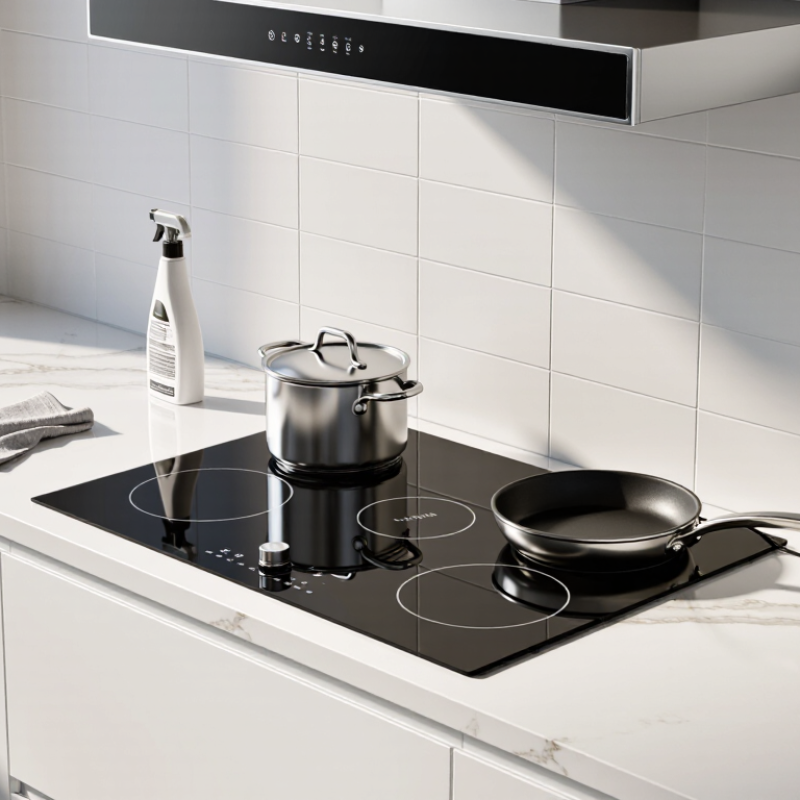
Why Is Induction Cooktop Maintenance Important?
An induction cooktop does not heat like a traditional burner. Beneath the glass, a copper coil creates a changing magnetic field. That field induces electrical currents inside a magnetic pan. The pan becomes the heat source, while the cooking surface stays comparatively cooler. Iron or magnetic stainless steel cookware works best. A simple magnet test can confirm compatibility.
The U.S. Department of Energy reports that induction cooking can be up to 10% more efficient than smooth-top electric cooking. It can also be three times more efficient than gas cooking. These figures depend on cookware, pan size, and cooking habits. A poorly matched pan wastes the system’s main advantage. It may heat unevenly.
Maintenance protects this process. Wipe sugary spills quickly, because hardened residue can bond tightly with hot glass. Use a soft cloth, not abrasive powder. Keep the underside of each pan dry and flat. Small grains of salt can scratch the surface when a pan moves. The U.S. Energy Information Administration identifies cooking as a regular household electricity use, so wasted heat still matters. I sometimes leave a pan slightly off-center, despite knowing better. That small mistake causes slower heating and uneven results. Regularly check the glass for cracks, keep ventilation openings clear, and follow the electrical safety guidance in the appliance manual. The surface looks simple. Its technology is not.
Induction cooktop maintenance matters because the glass surface is both strong and vulnerable. In my experience, most damage begins with small habits. A gritty pan can leave fine scratches when it moves across the surface. Spilled sugar may harden quickly and bond to the hot glass. Even a little salt under a pan can act like sandpaper.
Let the cooking surface cool before cleaning it. A sudden splash of cold water can create thermal stress and, in rare cases, cause cracking. Use a soft cloth and a cleaner suitable for glass cooktops. Avoid abrasive powders, rough sponges, and metal scouring pads. They may remove stains, but they can also create dull patches that are difficult to repair. I once used too much pressure on a baked-on mark. The stain disappeared, but the surface showed faint cleaning lines afterward.
Lift cookware instead of sliding it. Check the base for dried food, sharp edges, or trapped particles before cooking. Heavy cookware also deserves care. Dropping it can chip the glass, even when no crack appears immediately. Keep the control area dry, and remove spills before they spread. Do not place plastic, foil, or empty cookware on an active zone. These materials can melt or overheat the surface. Small marks are easy to ignore. That is where I still need improvement. Regular inspection helps reveal damage before heat and pressure make it worse.
Induction cooktop maintenance directly affects heating efficiency and even cooking. The U.S. Department of Energy reports that induction can be up to 10% more efficient than smooth-top electric cooking and three times more efficient than gas. That advantage depends on clean contact. A thin grease film, dried sauce, or a warped pan can create tiny gaps between the glass and cookware. Heat then spreads unevenly. Rice may stay firm in the center, while oil overheats near the edges. Regular care keeps energy moving into the pan instead of wasting it around the cooking surface.
Tips: Wipe spills after the surface cools. Use a soft microfiber cloth and a manufacturer-approved cleaner. Avoid abrasive powders and rough scrubbers, which can create fine scratches. Check pan bases for flatness before cooking. A cool, flat base should sit firmly without rocking. Keep the control area dry, too. Moisture can cause delayed or inconsistent responses.
ENERGY STAR guidance emphasizes efficient cookware contact and proper sizing for electric cooking. Matching the pan diameter to the heating zone helps prevent cold corners and unnecessary cycling. In daily use, I once blamed uneven soup on the cooktop, but the real problem was a slightly bowed pot. Maintenance is not always perfect. Still, checking the pan and cleaning the surface before each session takes less than a minute. That small habit makes simmering steadier and browning more predictable.
Induction cooktop maintenance is closely linked to daily safety. Although the surface does not produce an open flame, it can still cause burns, electrical faults, or damaged cookware. Food spills may harden around the control panel and make buttons respond poorly. A cracked glass surface is more serious. Stop using the cooktop and arrange professional inspection.
After cooking, wait until the residual-heat indicator disappears. Then wipe the surface with a soft, damp cloth and a suitable cooktop cleaner. Avoid abrasive pads, metal scrapers, and excessive water near the controls. These small choices matter. Keep the ventilation area clear, because blocked airflow can increase internal heat. Check the power cord occasionally for cuts, loose connections, or unusual warmth. Do not use the appliance if any problem appears.
Daily habits also reduce handling risks. Use flat cookware with dry bases, and center each pan over the cooking zone. A wet or unstable pan may slide when moved quickly. Keep towels, plastic packaging, and paper away from the active surface. Never place keys or metal utensils on the cooktop, even briefly. They may heat unexpectedly when magnetic cookware is present nearby. I used to treat cleaning as cosmetic work, but that view was incomplete. Residue can hide damage, distract the user, and delay a safe response. Read the appliance instructions, follow local electrical guidance, and let a qualified technician handle repairs. Don’t improvise with damaged parts.
Induction cooktops need a practical cleaning and inspection routine, not occasional cosmetic care. The U.S. Department of Energy estimates that induction transfers about 85% of its energy to cookware, compared with roughly 32% for gas. Efficient heating still depends on a clean, flat cooking surface and clear airflow beneath the unit.
Let the glass surface cool completely before cleaning. Wipe loose crumbs with a soft cloth, then use a small amount of pH-neutral cleaner. Avoid abrasive pads and heavy pressure. Dried starch can feel harmless, but it may scratch the glass when dragged under a pan. I once ignored a thin, greasy ring near the control area. It later collected dust and became harder to remove.
Inspect the cooktop weekly. Look for hairline cracks, damaged controls, unusual buzzing, or error messages. Never operate the unit with cracked glass. Check that ventilation openings remain free from towels, dust, and spilled food. The National Fire Protection Association identifies cooking equipment as the leading cause of reported home cooking fires, making residue control and attentive operation worthwhile. Keep pan bases dry and level. A warped pan can create uneven heating and misleading performance. Monthly, review the power cord and surrounding countertop for heat marks. Some inspections are easy to miss. Use the cleaning routine as a reminder, not a guarantee.
Following a practical cleaning and inspection routine helps prevent surface damage, maintain efficient heat transfer, and identify electrical or ventilation issues early.
The chart shows a practical maintenance schedule: wipe the surface after every use, perform a deeper clean weekly, inspect ventilation openings monthly, and check the power cord and plug quarterly. Always follow the instructions for your specific appliance.
Lift pans instead of sliding them. Check for crumbs, dried food, and sharp edges underneath. Even salt can act like sandpaper. I still forget sometimes.
Cold water on hot glass can create thermal stress. In rare cases, cracking may occur. Wait for the residual-heat indicator to disappear. Patience helps.
Use a soft cloth, microfiber cloth, and suitable glass-cooktop cleaner. Avoid abrasive powders, rough sponges, and metal scouring pads. Gentle pressure works better.
Let the surface cool first. Remove the residue with an approved cleaner and a soft cloth. Do not scrape aggressively. I once polished away a stain and left faint lines.
Clean contact helps transfer heat into the pan. Grease, dried sauce, and warped bases create tiny gaps. Those gaps can cause uneven heating and wasted energy.
Match the pan diameter to the heating zone. Use a flat base that sits firmly without rocking. A bowed pot may leave the center undercooked. I blamed the surface once.
Keep the control area dry and remove spills after cooling. Center pans over the zone. Keep towels, plastic, paper, and metal utensils away. Small details matter.
Stop using the appliance immediately. Arrange a qualified professional inspection. Do not repair damaged parts yourself. A visible crack is not merely cosmetic.
Understanding why induction cooktop maintenance matters begins with knowing how the appliance works. Magnetic energy heats compatible cookware directly, while the glass surface remains relatively cooler than traditional cooking surfaces. However, spills, scratches, residue, and unsuitable cookware can still affect performance. Regular care helps protect the glass cooking surface, preserve heating efficiency, and support even cooking results over time.
Learning how to maintain an induction cooktop also reduces everyday safety risks. Wiping up spills after the surface has cooled, using soft cleaning materials, checking for cracks, and keeping the control panel dry are practical habits. Users should also inspect cookware bases, remove food buildup, and avoid dragging heavy pots across the surface. A simple routine of cleaning and inspection can prevent minor problems from becoming costly damage while keeping the cooktop reliable, safe, and easy to use.
